


Anyone who has a culinary interest in turmeric knows that it's one of the most interesting spices in the world. What can it offer us besides its exotic flavor, how should we use it, and what should we keep in mind?
It's associated with ginger, its intense aroma, and distinctive color. We know it from Indian cuisine, where it lends a unique character. However, turmeric has many more benefits than just taste. To understand them, we need to delve deeper into its origins and how it came to us.
Turmeric - a flower from Indochina that conquered the world
Turmeric, commonly known as turmeric, occurs naturally in the form of a flower approximately 100 cm long. It is a relative of the angustifolia turmeric – easy to grow and popular in many homes. The long-leafed variety requires a bit more attention and, above all, a warmer climate. It is most commonly found in Africa, Asia, and Australia. Although it is not the flower that is attributed medicinal significance in Eastern cultures.
The most important part of the plant, from our perspective, is the rhizome. It is here that the health-promoting compounds that make turmeric one of the most powerful dietary supplements known to man are concentrated. This was discovered many centuries before our era, and it was initially used primarily for coloring foods. However, turmeric root has much more to offer. We mainly know it in its ground form, but what do we really know about it?
Turmeric Medicinal Properties
It's no secret that the gifts of nature bring healing benefits to people. Similarly, it's no surprise that the numerous benefits of this spice were discovered in Asia. Centuries ago, it was used to alleviate symptoms of muscle spasms, respiratory ailments, and inflammation. Thanks to modern research, we know that turmeric should be viewed as a natural antibiotic. Its effects have also been proven:
- Anti-cancer properties, as statistics show—Indians have a significantly lower incidence of cancer. Laboratory tests have shown its effects, particularly on the stomach, intestines, liver, and skin. It has also been shown to inhibit or reduce metastasis.
- Analgesic, by inhibiting the development of inflammation, which is linked to the functioning of pain receptors. According to research, it can be more effective than pharmacological agents, without causing side effects.
- cleansing the liver and also preventing the development of ulcers. this by increasing the flow of bile and supporting the reconstruction of the bile ducts
- Antioxidant, or antioxidant. Turmeric is one of the most potent antioxidants, making it highly effective in eliminating excess free radicals. As a result, turmeric also delays skin aging.
- antidepressant by supporting the activity of serotonin and dopamine – the happiness hormones. Turmeric also stimulates the formation of brain cells in the frontal cortex and hippocampus, having a significant impact on improving brain function.
- Protects the heart by preventing the formation of blockages in the arteries. It may prevent the development of atherosclerosis and protect against the formation of dangerous blood clots.
- Anti-arthritic, which is related to the very strong anti-inflammatory effect of turmeric.
One of turmeric's components, curcumin, is primarily responsible for this. It has been found to act not only at the cellular level but also at the body level, influencing receptors, growth factors, and enzymes. In addition to curcumin, there are several other biological compounds in turmeric that, in addition to their health benefits, also contribute to its characteristic aroma. These include ar-turmerone, α-turmerone, β-turmerone, β-caryophyllene, eucaliptol, and α-phellanderene, which, when combined, create the essential oil.
Turmeric is also extremely rich in vitamins such as thiamine, riboflavin, niacin, folic acid and vitamin B6. It also provides vitamins E and K, and is rich in calcium, iron, magnesium, potassium, phosphorus, sodium and zinc.
A total of 300 different compounds make up what we call turmeric. Each one works in a specific way, and their synergy multiplies its effectiveness. This means that adding turmeric to your diet can help improve a wide variety of bodily processes.
The effect of turmeric on digestion and weight loss
Turmeric owes its weight-loss properties to its significant role in digestive processes. It has a significant impact on fat digestion, reducing the risk of fat storage. It also improves metabolism, which plays a key role in weight loss. According to those who have added turmeric to their diet, it increases a sense of lightness and helps alleviate numerous ailments, such as bloating and gas. It's also worth noting that turmeric generally improves well-being—which can be crucial in weight loss. Another important effect of turmeric that supports dieting is its effect on liver function. Turmeric stimulates the secretion of gastric juices, which simply has a positive effect on digestion.
It's also worth noting that turmeric has virtually no impact on the caloric content of food, especially considering we only use a pinch of it. Its advantage, however, is its high dietary fiber content. Therefore, it can be safely incorporated into a weight loss program.
Turmeric - what for and how?
Now that we know how much good adding this golden spice to our lives can bring, the question now is how to do it. Will we need a cookbook?
Turmeric can be successfully added to soups, noodle and rice dishes, dips, cocktails, and juices. It adds flavor and color to dishes not only from Asian cuisine. You can be very creative here and experiment in different ways.
However, it's hard to imagine adding it in its familiar kitchen form to every daily dish. It's also worth knowing the proper dosages to avoid overdoing it, as with anything else.
Turmeric Tablets come to mind as the simplest and most popular solution when it comes to daily supplementation. However, it's worth paying attention to what's included in such a preparation. Often, it's an isolated curcumin extract—which, although the most important component of turmeric, isn't the only one. It's therefore recommended to look for extracts from the whole root, which promotes better absorption. Also, pay attention to the extraction method—the best ones allow preserve all the essential oils, so we obtain the maximum of beneficial effects in an easily accessible form.
Tablets may also contain additives to improve consistency or increase volume—which, as you might guess, should be avoided. Pure turmeric is the most effective, preferably with a certificate confirming its origin.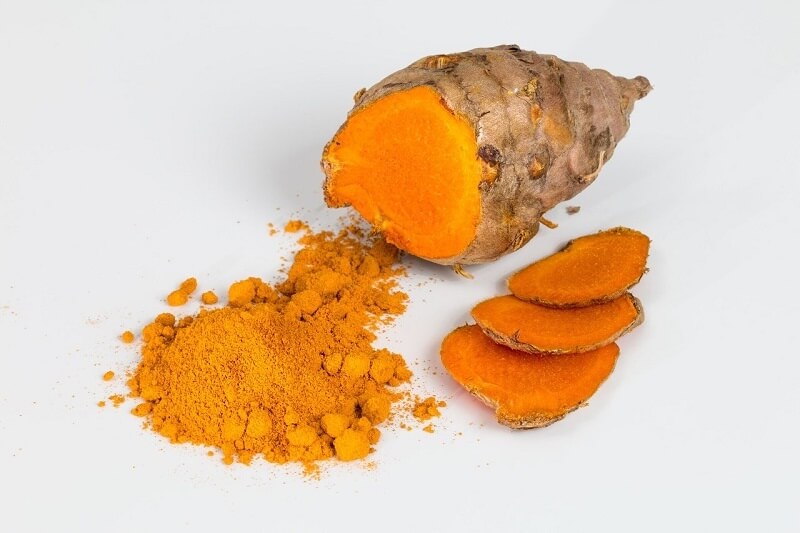
Turmeric with honey - a magical duo
The art of cooking is the skillful combination of ingredients to achieve the best and most delicious effect. It's similar with using natural products for health – you can often combine different, seemingly unrelated ingredients to achieve a double effect. Turmeric and honey, often called "golden honey," are such a combination. Both ingredients help fight viruses and bacteria – so together they will produce even more powerful effects. Their combination will stimulate the production of immune cells, which will help not only with colds and flu, but also with heart disease, inflammation, psoriasis, and acne.
Both turmeric and honey have properties that prevent bone loss. Regular use of this combination can therefore have a beneficial effect on joint health.
Using these two gifts of nature in the form of a hybrid enhances the action of the substances contained in them, but also simply improves well-being and creates a protective shield in the form of increased immunity.
Turmeric water at night - why is it worth it?
Consuming turmeric with meals or in tablet form has proven health benefits – we already know that. However, for centuries, humanity has been searching for the simplest and most effective methods, and preparing a turmeric preparation at night seems to be just such a solution. What can this offer us? Besides the already known health benefits of turmeric, drinking it before bed will improve our mood and, consequently, the quality of our sleep. Studies have demonstrated turmeric's healing effects on the brain, both by reducing symptoms of depression and by helping to prevent dementia.
Taking turmeric at night, when our brain regenerates, seems like a very good idea. This will help us fall asleep more soundly and peacefully, and processes that can improve our quality of life will occur during sleep. One of these processes is increasing the level of a substance responsible for neural connections in the brain. Sleep therapy – can you imagine anything more convenient?
Moderation above all!
Just like its color, the effects of turmeric are very powerful. Therefore, when using it, focus not on quantity, but on quality. It's estimated that you shouldn't exceed about 1.5 teaspoons per day. Moderation is key. Regardless of how you consume turmeric—whether as a spice or tablets—its effects are enhanced by regularity and consistency. Therefore, the best results will be achieved by incorporating it into your diet regularly, in moderate amounts.
Turmeric is not recommended for pregnant women due to its uterine stimulating properties. Caution should also be exercised when taking anticoagulants, as turmeric potentiates their effects. People with gallstones should also be cautious with turmeric.
Turmeric - the golden recipe
In the fast-paced Western world, it's sometimes worth utilizing methods and wisdom that have a rich tradition. Turmeric itself has been known since several centuries before our era, and traces of its existence can be found in every generation. Grandmothers certainly agree that turmeric saved them from oppression long before weight loss and immunity-boosting supplements. It's worth adding this golden element to your life to give it a new, healthy flavor.

